








From DIY Saddlebags to the Palisades™ Pack: The Evolution of the Ruffwear Dog Pack
There’s a common thread woven into every one of our packs—a commitment to quality and refined design that has driven the brand ever since its inception in 1994. What first began with a kid, his dog, and a homemade dog pack, has evolved into a decades-long passion for founder Patrick Kruse and the entire team here at Ruffwear.

Where It All Began
Patrick grew up just four hours from the Eastern Sierra mountains, in a family with a strong relationship with recreation in wild places. Some of his earliest memories involve traveling to Eastern Sierra trailheads to drop off or retrieve one of his sisters hiking the John Muir trail. Those experiences planted something early in Patrick, and before long, he was including his dog Marriah on his own backpacking trips.
Patrick quickly learned that carrying both his and Marriah’s gear and food was not feasible. In order to make it a week in the wilderness together, Marriah needed to carry her own food. So he sewed up a set of saddlebags, loaded Marriah up, and rode the train to northern California before heading into the Trinity Alps for a week.

The saddlebags Patrick had sewn for Marriah were a decent first swing, but not quite the right design. "It worked," he says, "but they didn’t have much structure. The pack was pretty frumpy, and the biggest faux pas was the chest strap that went across Marriah’s front legs. The front strap would drape and chafe, so that was an early learning and opportunity for improvement there."
Watching her move in that pack opened his eyes to possibilities. "That's probably the little grain of sand that started the thought process. Watching Marriah in it––she was wearing the pack well, but it didn't look like a very comfortable load for her to carry.”

In the years that followed, dogs were naturally part of Patrick’s adventures. He explored the Eastern Sierra, Joshua Tree, Los Padres National Forest, and Pine Mountain in the San Gabriel mountains. Patrick and his crew would often set up basecamp and climb a few peaks over a weekend, taking the dogs with them whenever feasible.
Ruffwear's first product came out of those early years. On a mountain bike ride in Los Padres National Forest, Patrick's friend Liz offered her dog Moqui some water using a plastic bag as a bowl. It didn't go well. Moqui refused to drink from the bag and precious water spilled out. Liz challenged Patrick to solve Moqui’s drinking problem.
"At the time I blew it off," Patrick says, "and then I thought, 'Hmm, maybe there is a way to make a bowl using waterproof fabrics.'" The Quencher™ Bowl launched in 1994, and the pack would follow soon after.

A Simple Request
Not long into Ruffwear’s beginnings, Patrick had a booth set up with his gear at the Kern River Festival. A fellow kayaker came by with a specific request: he wanted a dog pack with detachable saddlebags and water storage built into each side, so he could remove the saddle bags from the harness for water crossings, along with greater ease of fitting and adjusting. The water bladders offered a means of hydrating his dog on the go while also making it easier to balance the load. For Patrick, it was another compelling problem to solve, and he knew he needed an improved version of his original pack built in 1973.
The first commercial Palisades™ Pack introduced detachable saddlebags and integrated water bladders sourced from the box wine industry. The harness used 1680-denier ballistic nylon, squared off at every corner, with vertical compression straps running over the zipper and oriented vertically up the sides of the pack.
It was a good improvement on the original from 1973, but the execution created new problems. Hard corners caught on brush and rock. The straps needed to be undone every time you opened the bag. And that straight-across chest strap was still there, causing chafing on the front legs.
Rethinking the Shape
Within a couple of years, the chest strap gave way to a Martingale configuration—a much improved, more comfortable, and better load distributing webbing configuration. If the load in the pack was unevenly distributed, the Martingale corrected it with little effort or adjustment.

The saddle bags also went through iterative phases to address fit and structure, providing the ability to cinch down and release compression straps easily, while reducing hardware on the outside of the bag—further streamlining the pack to minimize snags and abrasion. But overall, the packs were still heavy and a little too complex.
Doing More With Less
A huge shift and improvement came with the evolution of the pack’s materials. The saddlebag profile went from boxy to teardrop, a design direction inspired from motorcycle fuel tanks. With more volume up front that tapered toward the back, this version distributed weight over the strongest part of the dog—their shoulders. Rain flies came off the zippers and reverse coil zippers were used to create simplified access to the saddle bags. The external compression straps and hardware were further simplified, dropping weight and creating a more intuitive user experience.
During this time, Patrick began changing his outlook on material weight. “We use woven fabric in our packs, which is measured by yarn weight or denier. Denier is a measure of yarn volume by weight, so a 1680 denier fabric has a yarn weight of 1680 grams per 100 meters of yarn. This yarn is then woven into fabric and results in the thickness and weight of the overall cloth. Over the years, we have reduced the weight of our pack cloth from 1680 denier to 420 denier, and now 150 denier.”
Using 90 percent less yarn woven into our fabric creates a much lighter pack, a more flexible fabric, increased durability, and accomplishes all of these benefits using fewer resources. “That was a game changer for me––realizing that we could use one-tenth of the fabric weight, and deliver a higher performing, easier to carry, more abrasion resistant and durable pack, that is an overall more sustainable product.”
As it turns out, many of the lessons learned over the years with human gear have inspired what we’ve built for our dogs, as well as the technical fabrics, user friendly hardware, and improved construction—like frameless design that lightens the loads. The ergonomic shapes move intuitively with our dogs and are better built to support and contain the pack contents.

"The amazing thing is the more we take away, the more flexibility and performance we achieve, the better performance you get, and the lighter and more durable our gear becomes,” says Patrick.
The Palisades™ Pack Today

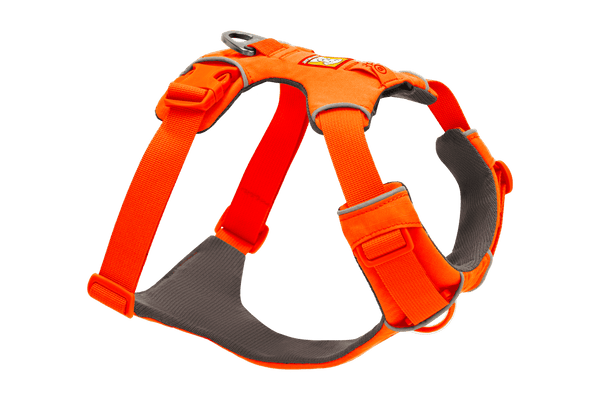
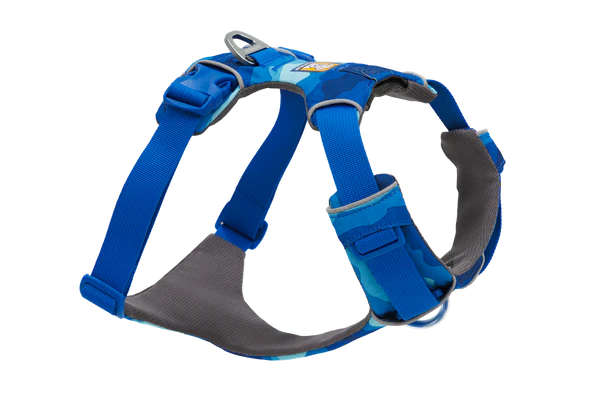
The latest iteration of the Palisades™ Pack revolves around the same core idea as that first version from the Kern River days. Built with a harness that works with a dog’s anatomy, this pack still keeps the human’s use and access front and center. With saddlebags that easily detach, it features an evolved harness that balances the load for your dog’s comfort and performance. The functionality of the pack is designed to fade into the background, reliably working the way it should for miles on end. Thirty-plus years of refinement live in each every one of the details.
The result is a pack that moves with your dog rather than bouncing around on top of them, and a load that stays centered and forward where it is best carried. The whole system functions as one, but also adapts to a harness-only modular configuration when desired—for bagging peaks from basecamp or converting for day-hikes. Complete with integrated streamlined zippered pockets, the Palisades Pack is big enough for dogs to carry their own food, water, and other trail necessities, and it breaks down small to carry only basic essentials for light and quick ascents.

What the Gear Is Really For
"When I was a kid, dogs basically lived in the backyard," Patrick says. "Over the years we've incorporated them into our daily lives and included them on more adventures, and that is part of what has driven us in building gear for dogs."
Well thought-out and well-made gear makes the trips easier, allowing for more fun for you and your dog, and that makes a huge difference. "A couple times I've been out in some pretty cold and wet environments without the proper gear, and my dog has gotten irritable and cranky,” says Patrick. “Performance gear and innovative features that take the edge off of some challenging moments make for a much improved experience all the way around.”

“When your dog gets to the trailhead, they're super eager to get out there. They're not thinking about the weather coming in or how much food they brought,” he says.
“They're just gleeful to be out there and getting after it. That is where humans get to come into the picture, by planning the gear, food, and resources to make the trip truly memorable. Be the human your dog always believes you to be.”
Once the gear is sorted, your dog can focus on bringing that wonder and excitement to every trip. “When they get to the trailhead, they're super eager to get out there. They're not worried about the weather coming in or how much food they brought. They're just gleeful to be out there and getting after it."
When equipment works as it should, everyone can engage and participate in the experience––which is the driving ethos behind every piece of Ruffwear gear. Made the way we’ve always done it, with curiosity and care for the connection we all share with our most loyal trail buddies.
Explore the latest version of the Palisades™ Pack in our Backcountry Collection.


